Skip to Content
PROBLEM · FLOW · SOLUTION

Start with the flow. Engineer the right architecture.

Describe the load, movement, and operating constraint. We connect the handling need to the right architecture, required technologies, and existing proof.

4 APPLICATION FAMILIES

Which material handling process do you need to automate?

Start with what must be moved, stored, or positioned. The solution comes next.

01 · APPLICATION FAMILY

Material Transport

Organize internal movement and production supply so material reaches the right workstation at the planned time.

Production & Line Feeding

Coordinate carts, fixtures, and subassemblies so lines and cells receive the required load at the planned time.

TYPICAL SITUATIONS
  • Body-shop, welding-line, and final-assembly feeding
  • Movement of carts, fixtures, and subassemblies
  • Component kitting and feeding of parallel cells
02 · APPLICATION FAMILY

Heavy Material Handling

Adapt movement and interfaces to heavy, large, or difficult-to-maneuver products.

Heavy & Oversized Load Transport

Move products, frames, or subassemblies whose mass, geometry, center of gravity, or route exceeds standard interfaces.

TYPICAL SITUATIONS
  • Inter-station transfers of large industrial products
  • Long or offset loads on constrained routes
  • Aerospace, energy, and heavy-manufacturing components
03 · APPLICATION FAMILY

Automated Storage

Connect material geometry, location, and retrieval sequence to the production requirement.

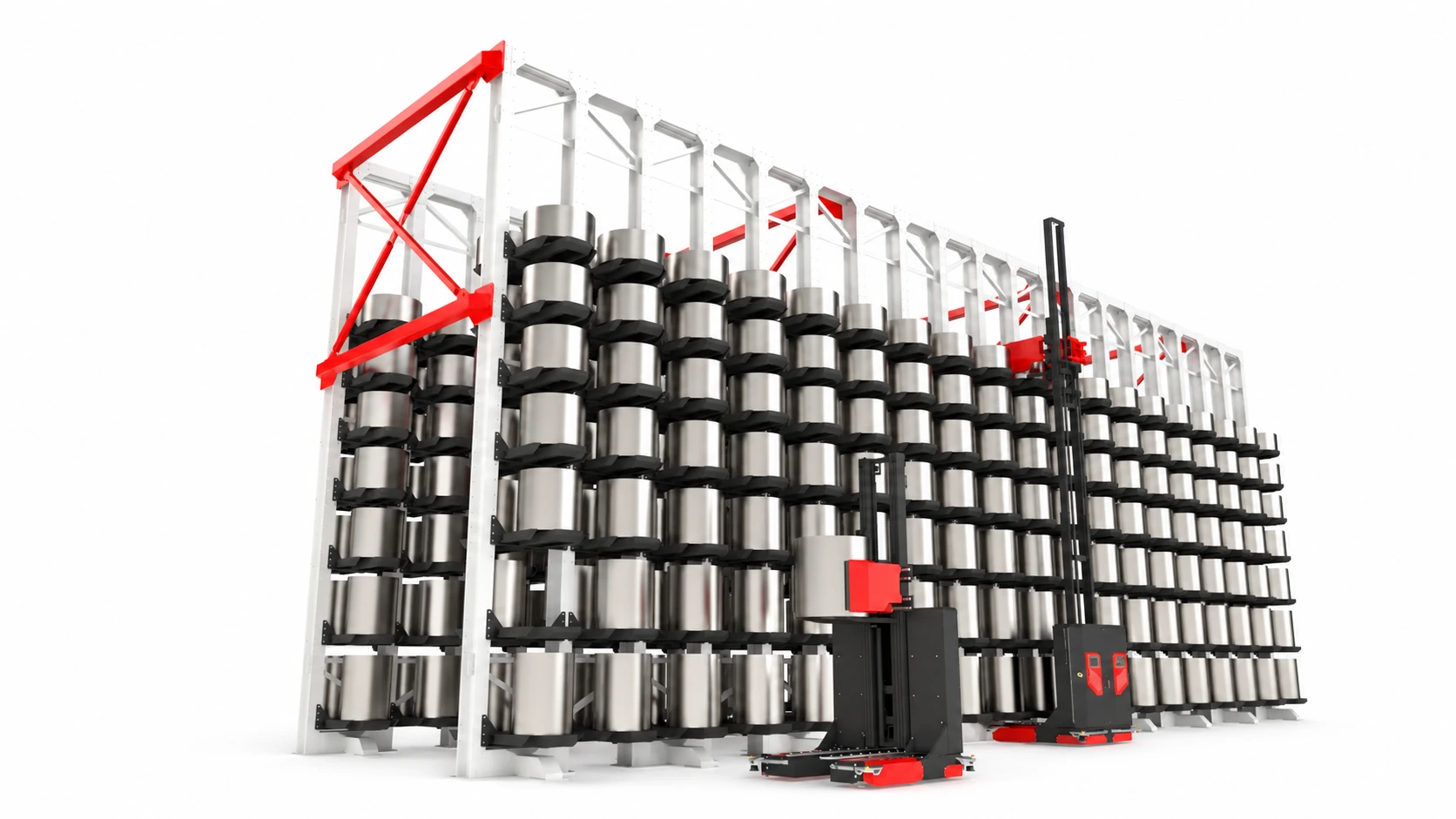
Automated Storage & Retrieval

Organize material storage and retrieval around geometry, location, and the sequence that supplies production.

TYPICAL SITUATIONS
  • Automated warehouses and storage areas
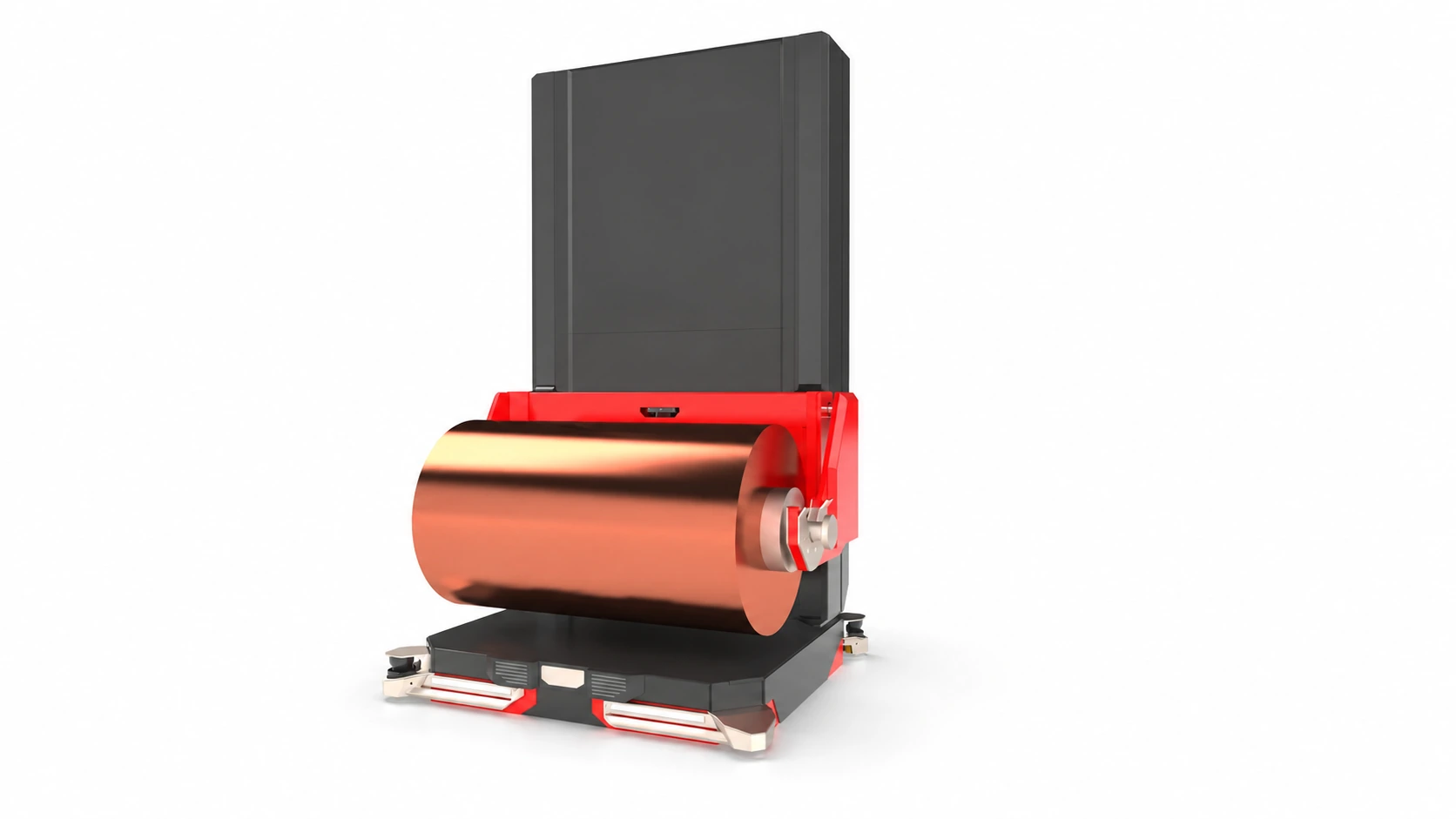
  • Vertical coil storage
  • Component storage and order preparation
04 · APPLICATION FAMILY

Specialized Handling

Evaluate a dedicated architecture when the interface, process, or environment imposes particular constraints.

Special-Environment Material Handling

Evaluate a dedicated architecture when the process imposes controlled conditions, particular temperatures, or environmental qualification defined by the project.

TYPICAL SITUATIONS
  • Cleanroom or controlled-environment processes
  • Project-defined temperature conditions
  • Areas where ATEX qualification is part of the validated scope
RELEVANT SOLUTIONS
CROSS-CUTTING OUTCOME

Create more capacity inside the existing space.

Densification is a possible result of a better-suited motion architecture and layout.

Production Floor Densification

Reduce space devoted to maneuvering and unnecessary travel where lateral transfers or compact approaches address a real layout constraint.

TYPICAL SITUATIONS
  • Parallel bays or cells with limited maneuvering space
  • Aisles determined by existing equipment turning radius
  • Adding capacity inside an existing building
YOUR APPLICATION

Tell us about the load, route, and process.

We will help frame the material-handling architecture before selecting a vehicle or piece of equipment.

Discuss the project